
The Growing Limitations of Roller Chain Drives
Across Australian industry, traditional roller chain drives have powered machinery for decades. But as equipment expectations rise – higher loads, faster speeds, longer duty cycles and tighter safety standards – the weaknesses in chain systems have become harder to ignore. Frequent lubrication, ongoing tension adjustments and premature component wear all translate to costly downtime. Add moisture, dust or product contamination, and chain life diminishes even faster.
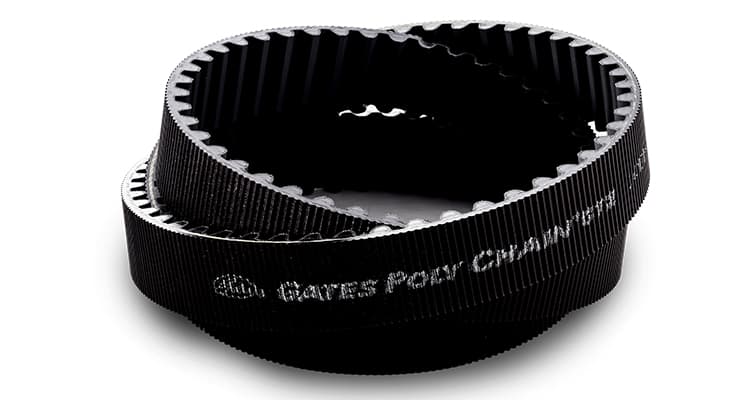
That’s why more operators are shifting to synchronous belt technology. With Gates leading the charge through its Poly Chain® portfolio, many sectors are finding that the long-term performance gains far outweigh the upfront cost of conversion.
The limits of traditional chain systems
According to Rob Michelson, National Product Manager – Belts at Motion, the biggest issue with roller chain is maintenance.
“Chain drives require constant attention – lubrication, re-tensioning and regular inspection for wear,” he explains. “That means downtime, labour cost and an ongoing risk of contamination, especially in food or clean environments.”
Chain lubrication itself introduces a set of problems. Excess oil can splash onto surrounding surfaces or product, while too little lubrication accelerates wear. In corrosive or wet environments, such as washdown areas or outdoor installations, chain and sprockets deteriorate even more quickly.
“If moisture gets into a chain system, corrosion will contribute to shorter drive life,” Rob says. “Without effective lubrication, links can potentially stiffen and eventually seize. Corrosion will also accelerated wear, resulting in short drive life.”
These issues drive up operational costs – not only through replacement parts, but through unplanned stops and the safety risks associated with worn or failing chain.
Why industries are converting to Gates belts
Gates Poly Chain belts address nearly all of these pain points at once. They require no lubrication, do not stretch, and maintain consistent performance over long service intervals.
“The appeal of converting is simple: Gates belts run clean, quiet and maintenance-free,” says Michelson. “Poly Chain can be installed inside existing chain guarding (size for size). We generally run a full drive analysis, to ensure our Poly Chain drive will be capable of handling our customers drive demands: kW, power, torque and speed.”
In addition to eliminating lubrication, the belts perform exceptionally well in wet, dusty or corrosive environments – making them ideal for food processing, timber mills, waste facilities and agricultural machinery.
A strong return on investment
While Poly Chain systems carry a higher initial price than standard chain, Michelson says the ROI is typically fast and significant.
“Once customers understand what they’re spending on chain – the lubrication, the tensioning, the downtime – the investment speaks for itself,” he says. “Production stoppages are often the most expensive part of a chain drive. Removing that risk makes the belt conversion cost look small.”
Many operators also see improvements in energy efficiency, reduced noise and better system reliability, particularly where shock loads or variable operating conditions are present.
Technology that keeps improving
Gates continues to refine its Poly Chain platform, with two main variants now available:
Poly Chain® GT Carbon
— featuring high-strength carbon fibre tensile cords for superior torque capacity and exceptional shock load resistance.
Poly Chain® Carbon Volt®
— a static-conductive version designed for volatile or hazardous environments, compliant with ISO 9563.
Both options deliver high torque transmission, long service life and exceptional reliability with zero lubrication.
Across all industries, a cleaner and more efficient choice
From conveyors and agitators to augers, pumps and packaging lines, Poly Chain conversions are proving their value across multiple sectors. With Motion providing drive analysis, product selection and national technical support, the conversion path has never been easier.
“Whether you’re in agriculture, food and beverage, manufacturing or recycling, the benefits are the same,” Michelson says. “Clean operation, reduced maintenance and equipment that just keeps running. Gates Poly Chain gives customers confidence in their drive system – and that’s worth a lot in demanding environments.”

Get the latest from Motion
Get exclusive offers and content, information about news and upcoming events and so much more.