
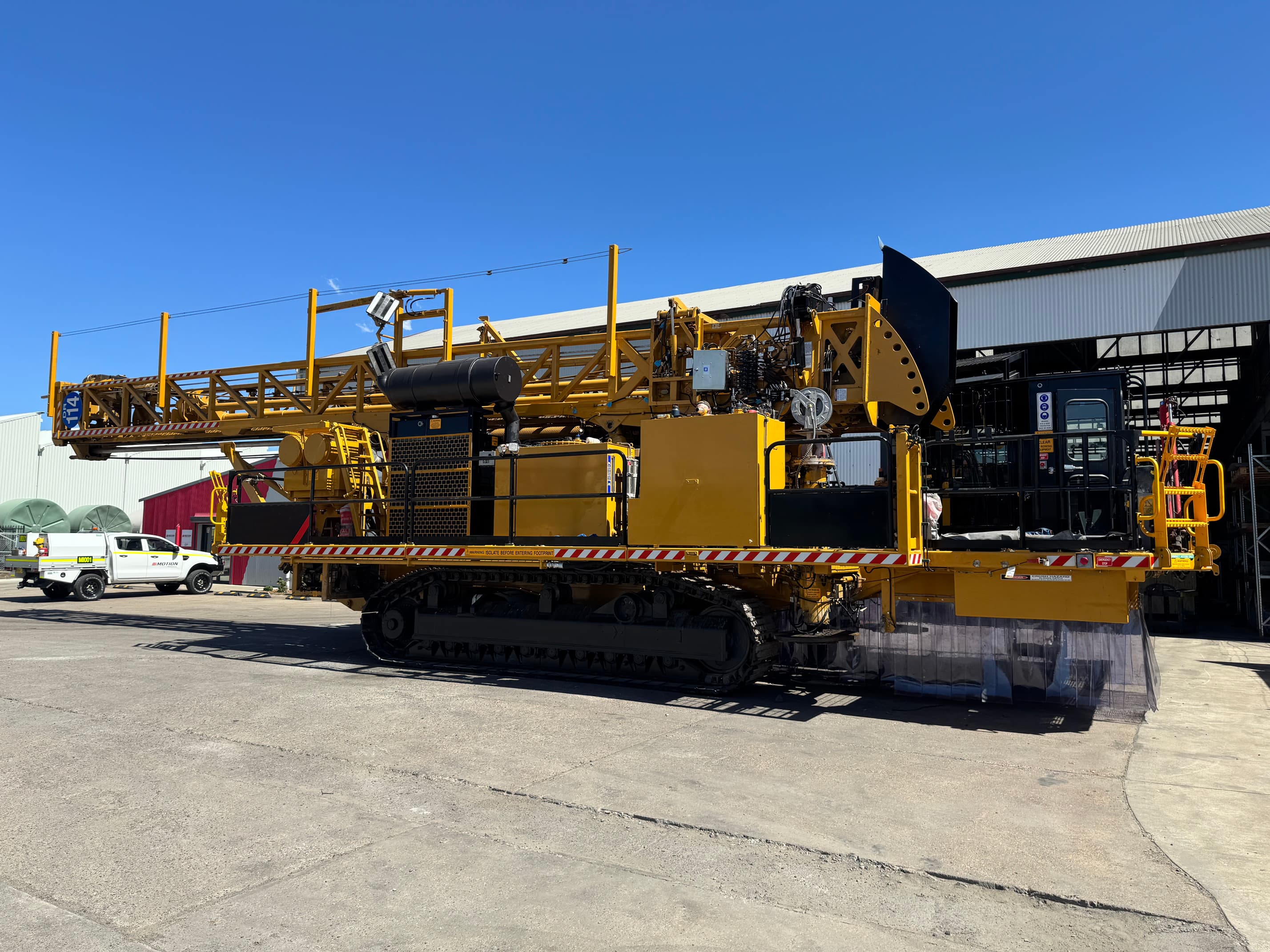
Recognising the Shift from Routine Maintenance to Full Overhaul in Drill Rigs
On a mine site, a drill rig is a production-critical machine that sets the pace for drilling schedules and downstream activities. When a rig is healthy, maintenance is planned and costs are predictable. When it isn’t, the warning signs show up fast: more breakdowns, longer repairs, and performance that gradually drifts away from specification.
William Rogers, Regional Manager NSW – Repair & Services at Motion, says the shift from ‘maintain’ to ‘overhaul’ is usually visible in the numbers. “A primary indicator is a sustained decline in MTBF combined with rising MTTR,” he explains. In other words: failures happen more often, and each repair takes longer – often because secondary damage is accumulating as worn systems keep operating.
The warning signs: when reactive repairs stop making sense
In practice, operators see this inflection point in a handful of recurring markers: repair events become more frequent, the same components fail repeatedly, and drill performance drops, as a result of slow hydraulics, intermittent air supply, or electrical issues. Safety risk can rise too, as maintenance crews spend more time on unplanned work under time pressure.
“These failures have a direct and compounding impact,” Rogers says. “Unplanned failures immediately reduce availability and disrupt drilling schedules.” The cost impact is rarely limited to the repair itself: emergency parts procurement, freight premiums, and secondary damage to adjacent components can quickly inflate the job.
Why piecemeal repairs can increase risk and cost
When overhauls are delayed, the temptation is to keep patching what breaks. The problem is that piecemeal repairs often treat symptoms rather than root causes. “Critical systems such as hydraulics, rotation assemblies, feed mechanisms, and structural components continue to operate with uneven wear profiles,” Rogers notes, increasing the likelihood of cascading failures.
Drill rigs are also highly integrated machines. “Structure is a big thing,” Rogers says. “Then you’ve got the engine, hydraulics, air compressor and electrical – they’re all equal factors in consistent operation. You can’t drill a hole without air.” The result is a machine that becomes progressively harder to keep stable as wear spreads across multiple systems.
What a drill rig overhaul looks like at Motion
There is no one-size-fits-all overhaul scope. Motion builds proposals based on machine condition, failure history, and the customer’s maintenance approach. “The more information they can give us early on – historical events, failure modes – the better the proposal will be,” Rogers says. “If they just want to send something in, it’s like opening Pandora’s box. You don’t know what you’re getting into until you pull it apart.”
A typical assessment includes condition checks across key systems and wear points – from structural inspection through to hoses, harnessing, and measurements that indicate broader see-saw wear. Motion prefers to execute overhauls in a workshop environment. “We like to do them in a workshop so we can control quality and maintain consistency,” Rogers says. On-site work is possible, but workshop execution supports better process control and more predictable outcomes.
Extending asset life and restoring planning certainty
For many customers, the value of an overhaul is planning certainty: a structured refurbishment can restore performance close to design levels at a fraction of the cost and lead time of new equipment, while maximising return on the original capital investment. It also helps shift maintenance from reactive fault-chasing to planned intervention – getting drilling schedules back under control and reducing the total cost per operating hour.


Get the latest from Motion
Get exclusive offers and content, information about news and upcoming events and so much more.