
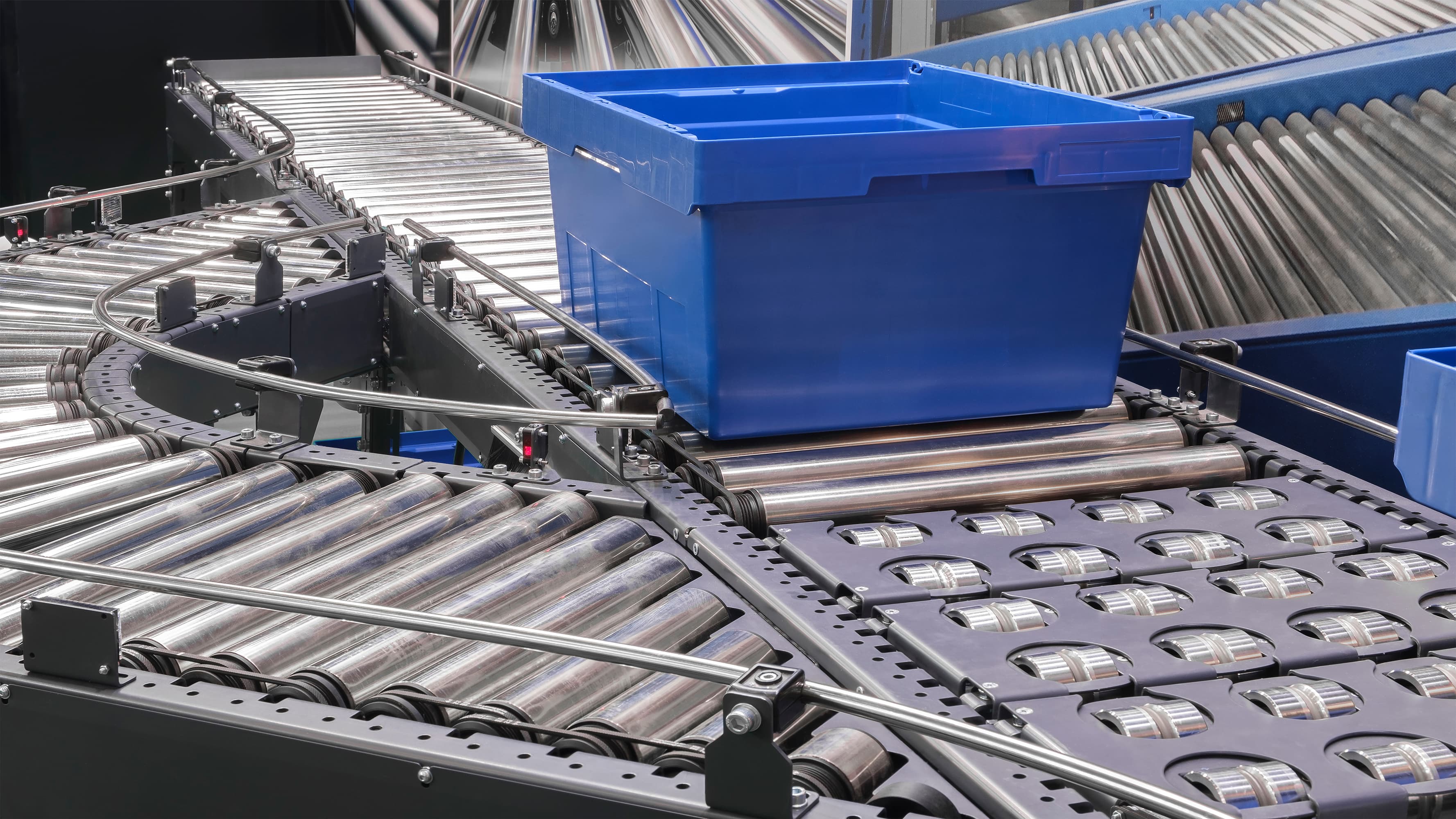
In food and beverage manufacturing, bearings are everywhere equipment needs to move. Conveyors, mixers, fillers, ovens, washdown areas, and processing lines all depend on components that keep shafts turning and production moving.
As Brett Ayerst Regional Sales Manager Queensland at Timken explains, that makes bearing reliability fundamental to plant performance.
“They’re used in all parts of the moving components within the production or processing of the product,” he says. “You want reliability. You want to make sure that you don’t have any issues with the product you’re using, or through processing.”
A harsh place for bearings
Food and beverage plants are not standard industrial environments. Equipment may be exposed to frequent washdowns, steam, water, chemicals, temperature changes, and strict hygiene expectations.
“Meeting hygiene standards is key for bearings used in F&B,” says Ayerst. “There’s a lot of washdowns, a lot of steam and water is used, so it’s one of the more extreme areas where bearings are used because of water and the need for hygiene and cross-contamination control.”
If the wrong bearing is used, the consequences can be significant. Corrosion, lubricant leakage, bearing collapse, or component failure can stop production, damage equipment, or create contamination risk.
Timken’s Regional General Manager – Sales, Theo Janse van Nieuwenhuizen, says material selection is critical.
“You’re looking at stainless steel and those kinds of things,” he says. “In some cases, some of those components within the bearing are not fully stainless steel. Timken’s are fully stainless steel, so the rolling elements, the rollers, the cage, everything.”
Food safety and uptime
Timken’s food and beverage range is designed to help manufacturers manage these risks through hygienic design, corrosion-resistant materials, and application-specific solutions.
That includes stainless steel rings, balls, and cages, FDA/EC-compliant optically detectable blue seals; NSF H1-registered lubricant options; and IP69K hygienic stainless ball bearing inserts. IP ratings refer to protection against dust and water ingress, with IP69K supporting high-pressure washdown environments.
Ayerst says Timken’s role is not only to supply product, but to help solve the problem behind the failure.
“We’re a leader in designing and manufacturing high-quality and premium-performance product,” he says. “We’re focused on trying to help solve unique food and beverage processing equipment challenges.”
That can also mean looking beyond conventional ball bearings. In one meat-processing application, Ayerst says a polymer solid bearing helped solve a recurring issue where bearings were being replaced every 12 weeks.
“We replaced it with one of ours, and it’s now gone for a couple of years,” he says. “That was a solution that we did through Motion.”

TIMKEN FOOD AND BEVERAGE CAPABILITY
Timken’s food and beverage range includes:
Hygienic, corrosion-resistant deep groove ball bearings
Stainless steel bearing inserts and housings
IP69K hygienic stainless ball bearing inserts
Solid Lube solutions for harsh washdown environments
Poly-Round bearing solutions with greaseless operation
Optically detectable blue seals and polymer components
NSF H1 lubricant and water-resistant grease options
Spherical, cylindrical, ball, and thrust bearing solutions
Coatings and engineered surfaces for corrosion and wear protection
Housings designed to support cleanability and food safety
Motion and Timken support
For Motion, Timken brings global application knowledge into local food and beverage operations.
“Motion deals with Timken because they’re a global leader,” says Fabio Rebecchi, Product Manager – Industrial Bearings at Motion. “They are able to find solutions that are tested and work globally, so we bring a global perspective to the Australian market in an industry that’s becoming more and more regulated.”
Rebecchi says downtime is especially critical when products are perishable and contamination can create non-recoverable losses.
“You need to be 100 per cent sure that you’re dealing with a supplier that supplies great technology, great product, and great solutions to keep the business moving forward,” he says.
That support is collaborative. Customers can come to Motion first, or Timken may identify an application issue and work back through Motion. Either way, the aim is the same: understand the plant, identify the risk, and match the right bearing solution to the operating environment.

Get the latest from Motion
Get exclusive offers and content, information about news and upcoming events and so much more.